
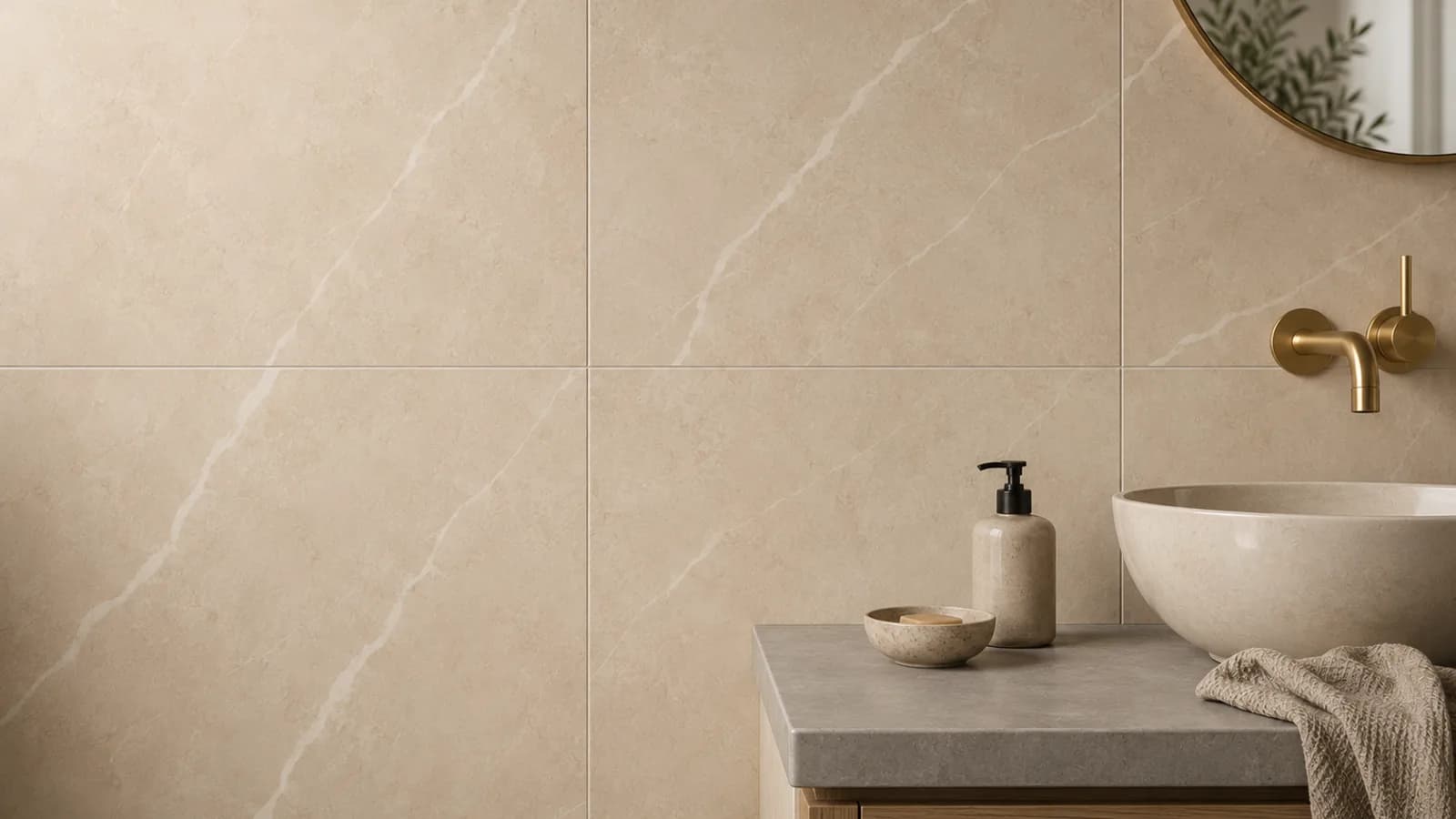
Marble look tiles remain popular because they bring depth and movement into a room without the maintenance of natural marble. You get a mineral pattern, a wide choice of veining and a ceramic surface that suits daily use. That makes them useful for bathrooms, kitchen walls, living floors and projects where durability matters.
The best choice starts beyond the product photo. Tile size, finish, grout colour and vein direction change the final look. In a showroom you can compare samples in real light and see whether the tile fits your space, furniture and budget.
Why marble look tiles are so popular
Natural marble needs care. It can stain, react to acids and require a more cautious cleaning routine. Porcelain marble effect tiles solve many of those issues. They handle moisture, clean easily and keep a stable look in busy rooms.
The style also works in many interiors. Beige marble look tiles create warmth. White tiles with grey veining feel brighter and more architectural. Dark marble effect tiles can work with black taps, wood and soft lighting when the room has enough light.
The benefits of marble look tiles
The main benefit is the balance between appearance and practicality. You can create a refined surface without sealing natural stone. Ceramic and porcelain tiles are hard, stable and often suitable for underfloor heating. In bathrooms, the easy-care surface matters every day.
The size range is another advantage. Marble look tiles are available in 60x60, 60x120, 80x80, 120x120 and large format slabs. Larger formats reduce grout lines and help a bathroom or living space feel calmer.
- Easier to maintain than natural marble
- Suitable for walls and floors depending on the series
- Wide choice of colour, veining and size
- Easy to combine with wood look, concrete look and plain tiles
- Often suitable for underfloor heating
Key considerations before choosing
Start with the vein pattern. Some collections have broad, high-contrast veining. That can look strong on a feature wall, but it may feel too busy on every wall of a small bathroom. Softer veining keeps the room calmer.
Then check the finish. Polished tiles reflect light and create a formal effect. Matte tiles feel quieter and show fewer marks. For floors and wet zones, always discuss slip resistance before deciding.
Marble look bathroom tiles
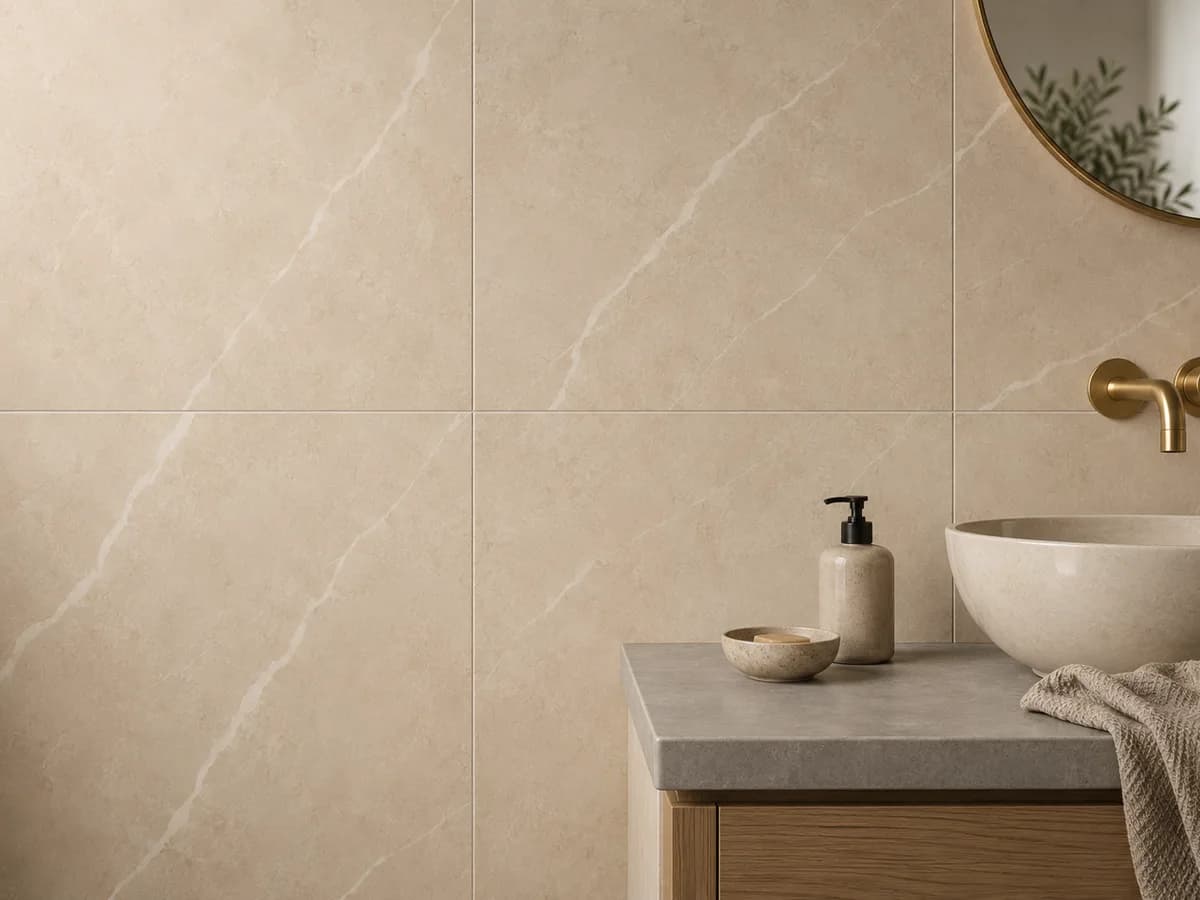
In a bathroom, marble look tiles can define the whole room. They work behind a vanity, inside a walk-in shower or on one full feature wall. In smaller bathrooms, a lighter tile with softer veining usually gives the most balanced result.
Grout colour matters. A grout close to the tile colour keeps the surface calm. A dark grout makes the grid more visible and can weaken the natural stone effect. For shower floors, a smaller size may still be the more practical solution depending on the drain and slope.
Marble look wall tiles
As a wall tile, marble look ceramic creates a clear focal point without adding another decorative material. It suits shower walls, kitchen splashbacks and feature walls in living spaces. You can use the same tile on floor and wall, but a calmer floor often keeps the room more balanced.
Gloss reads strongly on vertical surfaces. A polished wall can reflect light and make the room feel brighter. A matte wall feels more architectural and reserved. The right choice depends on the light, furniture and atmosphere you want.
Marble look floor tiles
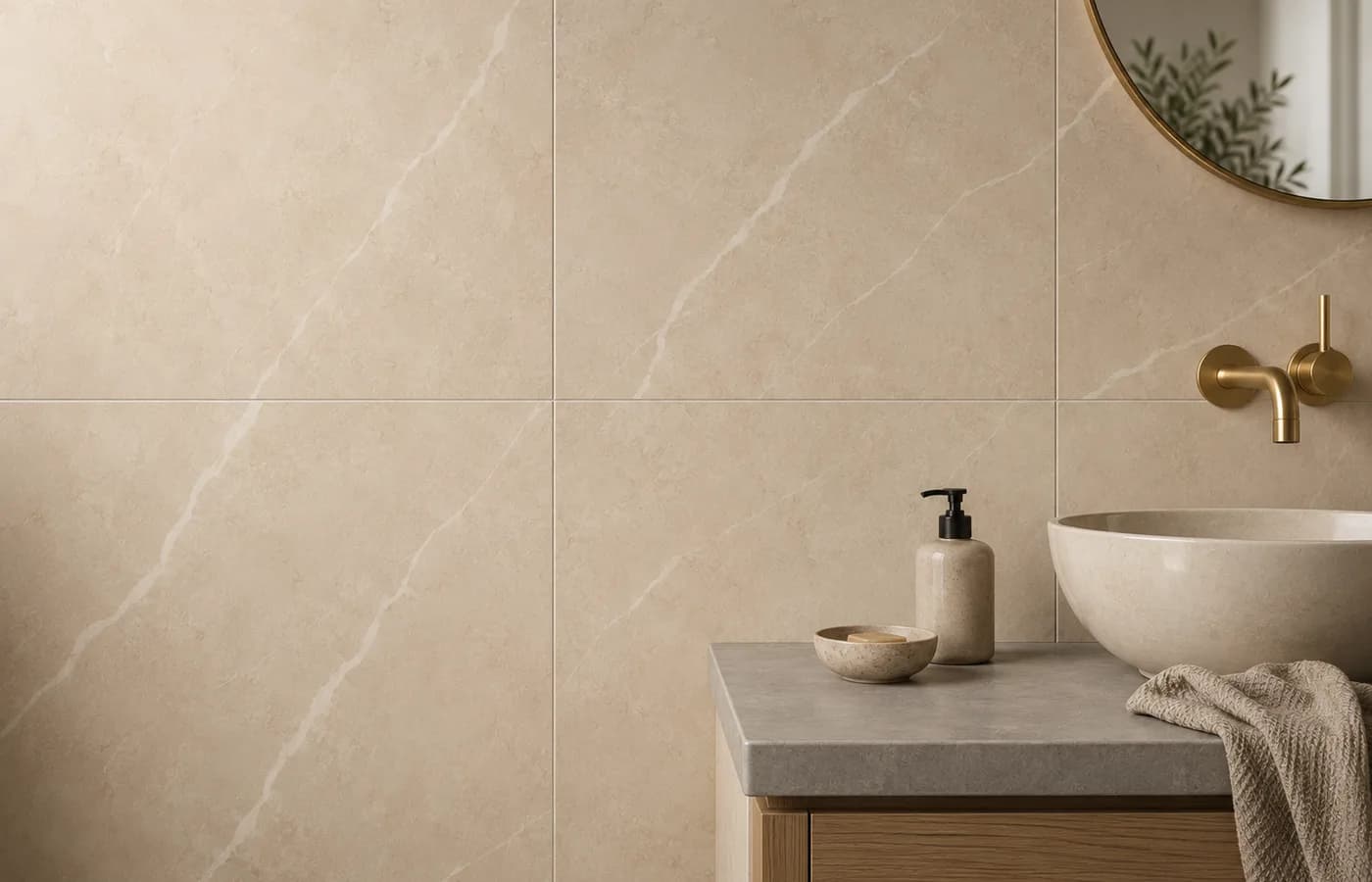
For floors, focus on size, finish and maintenance. A 60x120 tile creates a long modern line. A 120x120 tile can calm down a larger room, but it needs a flat substrate and careful installation. Do not choose a large format only because it is fashionable. The room needs to support it.
Marble look floor tiles combine well with quiet walls. Beige marble works with sand tones and wood. White with grey veining pairs well with black accents. Dark marble effect floors need more daylight and enough contrast in the furniture.
Small room or large room: how to choose
In a small bathroom, keep the visual rhythm calm. Choose a lighter tile, limit the number of materials and keep grout close to the tile colour. Large tiles can still work if the cut pieces fall in logical places.
In a larger room, the vein pattern can have more presence. Large format marble look tiles or slab-style tiles create a more continuous surface. Ask how the pattern repeats and how the tiles are packed before ordering.
Combining marble look with other materials
Marble look becomes stronger when you use it with restraint. Combine a clear vein with wood look, concrete look or a plain ceramic tile. Wood adds warmth. Concrete look makes the room quieter. Sand-coloured tiles soften white marble effects.
For taps and trims, black, brushed nickel, bronze and warm gold can all work. Keep the palette short. Most rooms look better with two main materials and one accent.
Matte or polished: which finish should you choose?
A polished marble look tile reflects light and feels more formal. It suits walls, generous bathrooms and spaces where you want a stronger visual effect. It also shows reflections and marks more clearly, so the application matters.
A matte marble look tile feels calmer. The veining remains visible, but the surface blends more easily into daily life. For family homes, renovations and floors, matte is often the more practical choice.
When should you avoid marble look tiles?
Marble look tiles do not suit every room. If the interior already has strong wood grain, busy patterns or several decorative materials, heavy veining can make the space feel crowded. A quiet stone look, concrete look or plain tile may work better.
Rooms with many small cuts can also weaken a large marble pattern. Niches, angled walls and small toilets can break up the veining. In those cases, use marble look on one wall or one detail instead of everywhere.
Practical checklist before choosing
Bring measurements to the showroom. Note the room, the amount of daylight and any materials that are already fixed. That helps us discuss size, grout colour, stock and delivery in a practical way.
Ask about packing, waste allowance and delivery as well. Large formats need accurate ordering from the start. Extra orders from a later production batch can show a small difference.
- Which room are you tiling?
- Will the tile be used on the floor, wall or both?
- Do you want subtle or strong veining?
- Does matte, satin or polished suit the use?
- Which grout colour do you want?
- How much cutting waste should you allow?
Conclusion
Marble look tiles are a strong choice when you want character, easy maintenance and a controlled material budget. The best result depends on the balance between veining, size, finish and light.
At Il Mondo Tiles in Merelbeke, you can compare samples in real showroom light. Bring your measurements and we can review quantity, suitable formats and pricing through manufacturers and partner stock.
Continue your research
FAQ
Frequently asked questions
Are marble look tiles suitable for bathrooms?
Yes. Ceramic and porcelain marble look tiles work well on bathroom walls and often on floors. For wet areas, check the finish and slip rating.
Are marble look tiles easy to maintain?
Yes. Ceramic tiles are easier to maintain than natural marble and do not need sealing. Use a suitable tile cleaner and avoid products that leave a greasy film.
Should I choose a matte or polished marble look tile?
Matte is calmer and practical for floors. Polished reflects more light and works well on walls or larger bathrooms where you want a stronger effect.
Do marble look tiles work in a small bathroom?
Yes, especially with a light colour, subtle veining and grout close to the tile shade. The format should be checked against the expected cuts.
Can marble look tiles be combined with wood look tiles?
Yes. Wood look tiles add warmth and balance the mineral character of marble look. Choose a wood tone that matches the undertone of the veining.
Are large format marble look tiles a good choice?
Often yes. Large formats reduce grout lines and show the pattern better, but they need a flat substrate, careful handling and correct waste allowance.
What is the difference between real marble and marble look tiles?
Real marble is natural stone and more sensitive to staining and acids. Marble look tiles are ceramic or porcelain and offer a marble effect with simpler maintenance.
Il Mondo Tiles
Compare tiles in the showroom
Bring measurements or photos. We help you compare sizes, finishes and pricing for your project.